7 Gambas Crescent, #09-09, Ark@Gambas, Singapore 757087 ♦ Reservation : +65 6417 9690

Key Pressure Points to Avoid While Pregnant
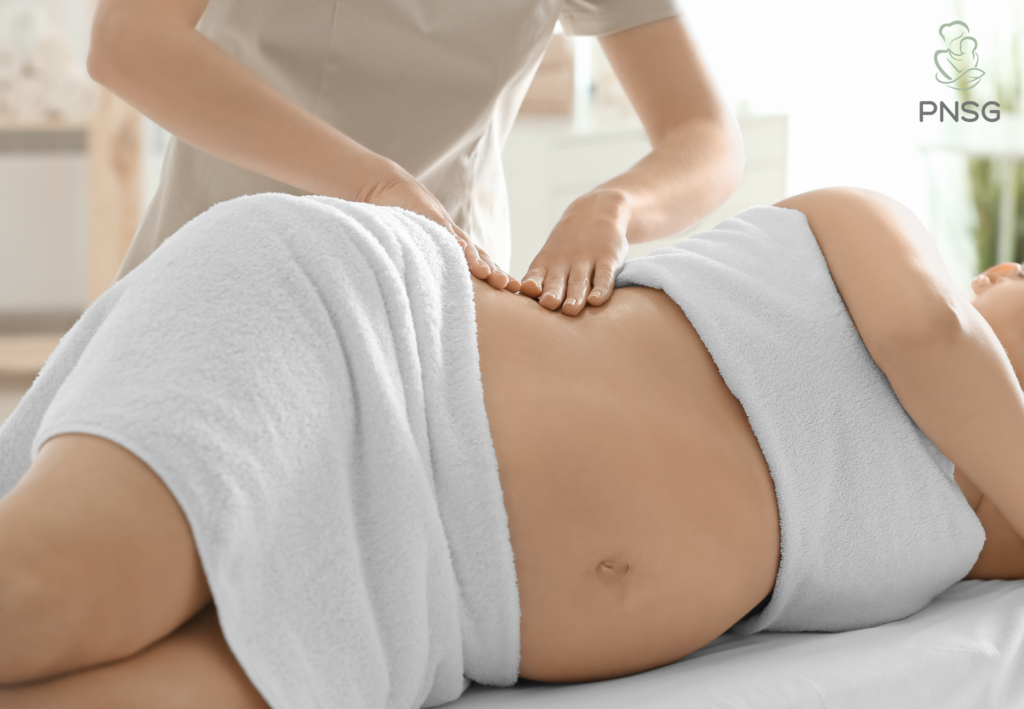
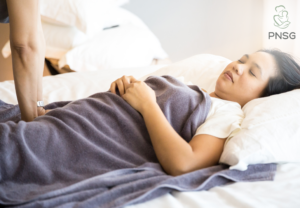
Pregnancy massage is wonderful to have and has been practised throughout history. Its main objective is to alleviate the discomforts felt by a mother during her later months of pregnancy when the baby starts to grow and exert pressure on various joints and body parts.
If you’re an expectant mother, a massage is a welcomed relief. Nothing can replace the sensation of hands squeezing away all your pain and tiredness.
There are, however, some safety concerns, especially as you reach your due date. Are all pregnancy massage techniques safe? Let’s find out.
What Are The More Sensitive Pregnancy Massage Pressure Points?
When a professional therapist carries out a massage, they will target specific points on your body that are known to be beneficial. These points help alleviate aches and pains, help with healing, increase circulation, and so on.
On the other hand, some points on the body should be avoided. These key pressure points are thought to be more sensitive than others. In other words, they’re believed to stimulate contractions.
It’s important to remember that not all mothers experience these pressure points the same way. This means that not all mothers will react if these points are stimulated. However, as a precaution, they are avoided entirely.
Among the known pressure points that are avoided by trained massage therapists in pregnancy massage techniques include
- On the hands: The fleshy area between the thumb and index finger, known as Hegu. Also, avoid the pulse area.
- The abdomen: It’s obvious that your entire abdomen should not be massaged or pressured. Not only can this stimulate contractions leading to labour, but it may also not be good for your baby.
- The breasts: Your breasts are also rather sensitive, and there are no beneficial points there
Massage on the feet is allowed in prenatal massages. Reflexology spots around the heel, ankles, baby toe and sole (baby toe & sole represent urinary bladder) are allowed to be massaged but only by using the kneading technique.
This is why it’s important to be massaged by a trained therapist that has been certified. At places like PNSG, therapists are trained to know these pressure points to ensure your safety and that of your baby using specialised prenatal massage techniques.
How is Prenatal Massage Conducted?
When you book a prenatal massage session with PNSG, we will send over our professional female therapist to your home. This is to increase convenience and reduce your need to travel and move.
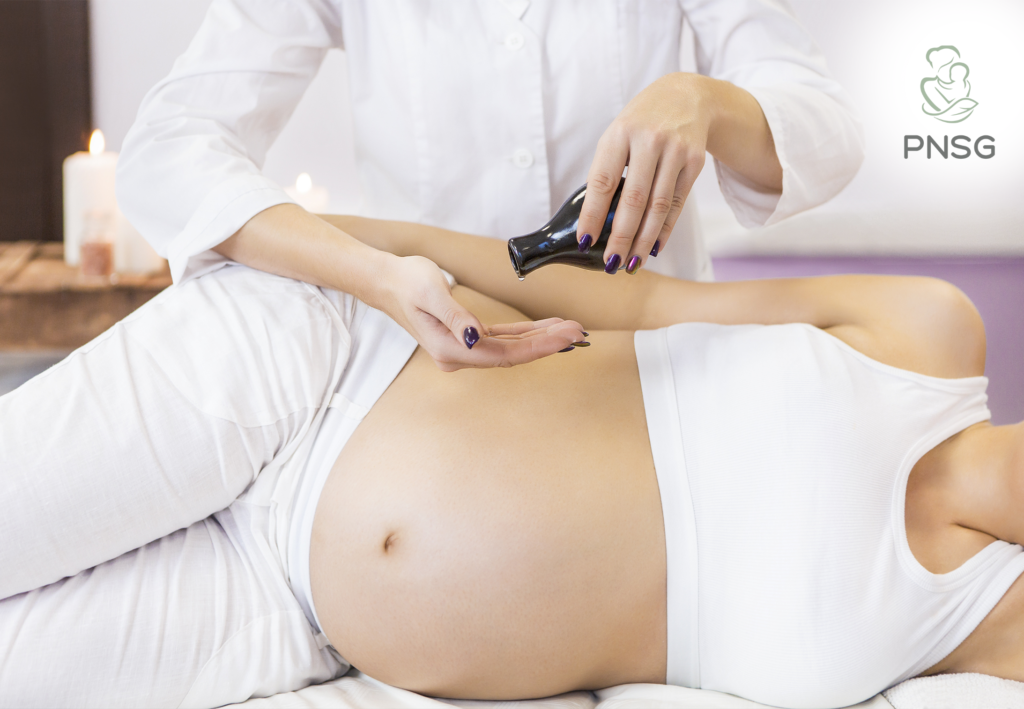
You can also add a full-sized massage bed that the therapist will bring along for your added comfort. Each session lasts about 60 minutes and consists of the following steps:
- Warming Up
The therapist will help you calm down and relax as you lie on your side. This ensures that you’re completely rested and that your muscles won’t cramp up during the massage session leading to pain. It also helps minimise any risk of injuries during the session.
- Removing Water Retention
The massage session will start with the feet and legs. Hormonal changes, especially towards the third trimester of pregnancy, will cause swelling in the calves and feet, which can sometimes cause a feeling of ‘tightness’ and difficulty moving around.
Massaging this area helps drain the buildup of fluid, helping them reach key points in the body responsible for regulating them.
- Full Body Massage
After the feet, our PNSG therapists will move on to the rest of the body, particularly the back and spine. This relieves muscle tensions and discomforts that often lead to pain.
The pain felt on your back during the later months of pregnancy is caused by strain and minor tears in your back muscles from carrying the increased weight of your baby. Massaging also helps in their healing as it encourages blood circulation to the affected areas.
- Relaxation
The final part of the massage will focus on your shoulders and temples to relieve and prevent headaches. This part of the massage also encourages better sleep and prevents headaches in the future, especially those resulting from a lack of rest.
The Benefits of Prenatal Massage
Prenatal massage has been shown to provide a pregnant mother with a host of health benefits and comfort, including:
- Improves blood circulation and reduces swelling
- Reduces hip and back pain
- Promotes rest and stress relief
- Reduces soreness and leg cramps
Frequently Asked Questions about Pregnancy Massages
We’ve also produced a list of some of the most often-asked questions from our clientele if you’ve ever questioned if certain portions of your body should be handled or massaged while pregnant, here is the place to come!
Can I have a massage when I am pregnant?
Answer:
Without a doubt! We strongly advise getting a prenatal massage after 28 weeks of pregnancy and, at most, two weeks before your projected due date. You may still receive a pregnant massage between the 16th and 27th week, but you must first seek permission from your doctor or gynaecologist!
Is it okay to massage a pregnant woman?
Answer:
Yes, it is most definitely alright to message an expectant mother. To be safe, search for “professional pregnant massage near me” to get a professional massage. This is because there may be particular bodily regions you should avoid that average people are unaware of, which leads us to the following question:
Which areas to avoid in pregnancy massage?
Answer:
While a professional prenatal massage is typically safe when performed by qualified professionals, we recognise that some moms prefer to have their close loved ones touch them. The belly, breast, pulse area, and Hegu are some regions you may want to avoid or at least apply less pressure to while massaging.
What pressure points should be avoided during pregnancy?
Answer:
Every woman is unique, and so is her body’s reaction to massage during pregnancy. If your body is especially sensitive and quickly aroused, avoid massaging pressure points such as the three fingers above your ankles and the region between your thumb and forefinger.
Can you massage your feet when pregnant?
Answer:
You most certainly can! Indeed, the feet are one of the body areas most affected by water retention during pregnancy, and massages are an excellent cure for this. Massaging your feet when pregnant might assist in easing swellings and cramps, especially if you’re carrying another human being. However, the massage must use a certain technique to avoid any complications. Look at the answer below.
Can you massage your ankles when pregnant?
Answer:
Certain pressure points such as ankles, heels, baby toe and soles are suitable to be massaged for expectant mothers whose bodies are particularly sensitive or reactive to stimuli. However, the massage can only be done using the kneading technique. Acupressure must be avoided during a prenatal massage.
What positions should be avoided during pregnancy?
Answer:
Avoid reclining on your stomach, especially if your baby bump is…prominent. A prenatal massage, unlike postnatal massages, does not need you to lie on your stomach. Your back will still be massaged to relieve hip and back pain, but you will only be required to lie on your sides.
Booking Your Own Prenatal Massage Session
Overall, remember not to cut corners or take needless risks, especially when it comes to you and your soon-to-be-born child. Understanding is only half the fight. Now that you know what pressure points to avoid while pregnant and NOT to do, it’s time to do what you SHOULD do!
Speaking of what you should do, if you are now searching on your phone for “prenatal massage near me” or the “best prenatal massage singapore”, here’s a little bonus tip for you – we at PNSG offer massages too!
That’s right, we have prenatal massages and even after your delivery, we also have complete packages for postnatal massages as well. All you have to do is sit back and let us take care of your aches and pains now and into motherhood. So, drop us a call today or swing by our website (digitally, don’t physically swing now that you’re pregnant) and leave us an enquiry or book your own massage packages today!