7 Gambas Crescent, #09-09, Ark@Gambas, Singapore 757087 ♦ Reservation : +65 6417 9690

What Are The Common Skin Conditions During Pregnancy?

Pregnancy brings plenty of changes to your body, and your skin is no exception. You may suddenly notice breakouts, darker patches, itchiness or stretch marks — even if you have never experienced these concerns before.
Many of these changes are linked to fluctuating hormones, increased blood flow and the natural stretching of your skin as your baby grows. The good news is that many pregnancy-related skin changes are common and may gradually improve after giving birth.
Still, it helps to know what is normal, how you can care for your changing skin and when a skin concern may be worth discussing with your doctor.
Here are some of the most common skin conditions and changes you may experience during pregnancy.
Why Does Your Skin Change During Pregnancy?
Your body goes through major hormonal and physical changes throughout pregnancy. Rising hormone levels can affect your skin’s oil production and pigmentation, while increased blood flow may make certain blood vessels more noticeable.
At the same time, your skin gradually stretches across areas such as your abdomen, breasts and thighs to accommodate your changing body. This can contribute to itchiness, sensitivity and stretch marks.
Not every mum-to-be will experience the same changes. Some may notice clearer, glowing skin, while others may find themselves dealing with breakouts or pigmentation for the first time.
Common Skin Conditions During Pregnancy
Here is a quick overview of some common skin conditions during pregnancy:
| Skin Change | What You May Notice | Common Areas |
| Pregnancy acne | Pimples, oily skin or clogged pores | Face, chest and back |
| Melasma | Brown or greyish patches | Cheeks, forehead and upper lip |
| PUPPP | Raised, itchy red bumps or patches | Usually starts around the abdomen |
| Stretch marks | Pink, reddish or purple lines that may fade over time | Abdomen, breasts, hips and thighs |
| Linea nigra | A darker vertical line | Middle of the abdomen |
| Spider veins | Small, visible blood vessels | Face, neck, arms or upper body |
Pregnancy Acne
Thought you left acne behind in your teenage years? Pregnancy hormones may have other plans!
Hormonal changes can increase the amount of oil your skin produces, which may contribute to clogged pores and breakouts. Pregnancy acne can range from a few occasional spots to more noticeable breakouts.
If acne appears, keep your skincare routine simple. Wash your face gently, avoid squeezing or picking at spots and choose products that do not unnecessarily irritate your skin.
More importantly, don’t assume that your usual acne treatment is automatically suitable during pregnancy. Some acne medications and skincare ingredients are not recommended for pregnant women, so check with your doctor, dermatologist or pharmacist before starting or continuing medicated acne products.
Hyperpigmentation and Melasma
Have you noticed certain areas of your face becoming darker during pregnancy?
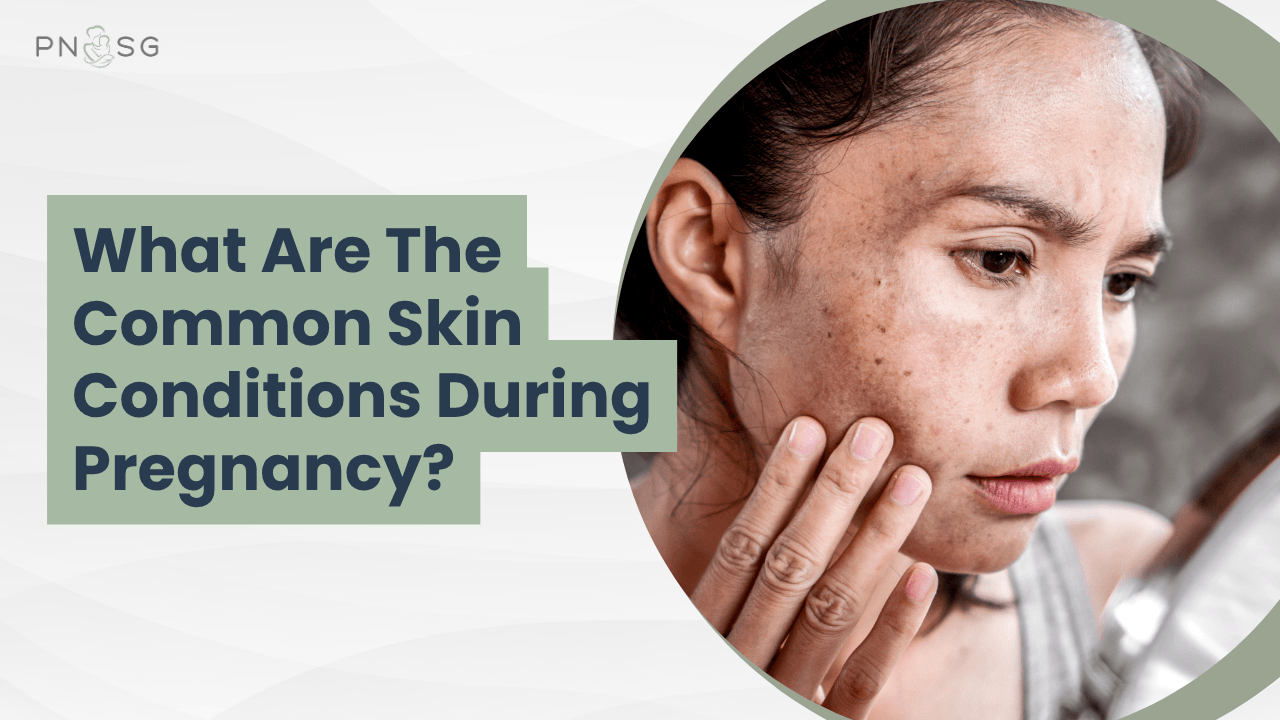
Hormonal changes can increase melanin production, causing areas of the skin to darken. One common example is melasma, sometimes known as the “mask of pregnancy”. It typically appears as brown or grey-brown patches, often around the cheeks, forehead, nose and upper lip.
Sun exposure can make pigmentation more noticeable, so daily sun protection is particularly important. Consider wearing a broad-spectrum sunscreen, seeking shade and wearing a hat when spending time outdoors.
For many mums, pregnancy-related pigmentation gradually becomes less noticeable after delivery, although it may take some time.
Pruritic Urticarial Papules and Plaques of Pregnancy (PPUPPP)
PUPPP stands for Pruritic Urticarial Papules and Plaques of Pregnancy. It is an itchy rash that generally appears later in pregnancy.
It may begin as small, raised red bumps around the abdomen before spreading to other areas such as the thighs or buttocks. Although the itchiness can be frustrating and uncomfortable, PUPPP itself is generally considered harmless.
The exact cause isn’t fully understood. If you develop a new or widespread rash during pregnancy, however, it is worth getting it checked rather than trying to diagnose it yourself.
Your doctor can help identify the cause and recommend pregnancy-appropriate ways to manage the discomfort.
Stretch Marks
Stretch marks are probably one of the best-known pregnancy skin changes.
As your body grows, the skin stretches quickly, particularly around the abdomen, breasts, hips, thighs and buttocks. This can cause stretch marks to appear as pink, red, purple or darker lines depending on your skin tone.
Genetics may also play a role, which means some women naturally develop more stretch marks than others.
While moisturising regularly can help keep stretched skin feeling comfortable, there is no guaranteed way to completely prevent stretch marks. Over time, they often fade and become less noticeable, although they may not disappear entirely.
Other Common Skin Changes You May Notice
Pregnancy can bring several other changes that aren’t necessarily “skin conditions” but may still catch you by surprise.
Linea nigra is a dark vertical line that can develop down the centre of your abdomen. It is linked to increased pigmentation during pregnancy and often becomes lighter after childbirth.
You might also notice spider veins, which are tiny visible blood vessels near the surface of the skin. Increased blood volume and hormonal changes during pregnancy may make them more noticeable.
Varicose veins are another common change, particularly in the legs. They occur when veins become enlarged or swollen and can sometimes feel uncomfortable.
Some mums may also notice small skin tags, increased sensitivity or generally drier and itchier skin.
Most of these changes are not necessarily a reason to worry, but don’t hesitate to mention anything unusual or uncomfortable during your prenatal appointments.
How to Care for Your Skin During Pregnancy
With so many changes happening at once, you don’t need an overly complicated skincare routine. Gentle and consistent care is usually a good place to start.
Try these simple habits:
- Cleanse gently: Avoid aggressively scrubbing your skin, particularly if it feels more sensitive than usual.
- Moisturise regularly: Moisturiser can help keep dry or stretched skin feeling more comfortable.
- Protect your skin from the sun: Daily sun protection can be particularly helpful if you’re experiencing melasma or other pigmentation changes.
- Avoid scratching: For itchy skin, try moisturising and wearing loose, breathable clothing instead.
- Stay hydrated: Drinking enough fluids supports your general health during pregnancy.
- Check your skincare ingredients: Pregnancy may change which active ingredients or medications are appropriate for you. Ask your healthcare provider or pharmacist if you’re unsure.
Pregnancy isn’t necessarily the best time to experiment with lots of new strong skincare products. A simple routine that keeps your skin clean, comfortable and protected may be all you need.
Can Prenatal Massage Help You Feel More Comfortable During Pregnancy?
Changes during pregnancy aren’t limited to your skin. As your bump grows and your body adapts, you may also experience muscle tension, body aches and general physical discomfort.
This is where best prenatal massage Singapore can become a relaxing addition to your pregnancy self-care routine.
Rather than treating skin conditions or preventing stretch marks, prenatal massage focuses on supporting your overall comfort and relaxation as your body changes.
At PNSG, our Prenatal Massage is designed with mums-to-be in mind. Having a trained therapist come to your home can also make things more convenient when travelling around with a growing bump starts to feel tiring.
Just remember that massage should not be considered a treatment for pregnancy-related skin conditions. If you have a rash, infection, unexplained skin changes or another medical concern, speak to your healthcare provider first.
When Should You See a Doctor About Skin Changes During Pregnancy?
Most pregnancy-related skin changes are harmless. However, some symptoms deserve medical attention.
In particular, severe itching during pregnancy should not simply be ignored. While mild itching can occur because of hormonal changes and stretching skin, intense itching — particularly on the palms of your hands or soles of your feet, or itching that becomes worse at night — can sometimes be associated with intrahepatic cholestasis of pregnancy (ICP), a liver condition that requires medical assessment.
Speak to your doctor, midwife or maternity team if you experience:
- Severe or persistent itching
- Itching on your palms or the soles of your feet
- A new or widespread rash
- Blisters or painful skin changes
- Signs of a skin infection
- Skin symptoms that are getting worse or affecting your daily life
If you’re unsure, it is always better to get your symptoms checked rather than assuming they are simply another pregnancy change.
Frequently Asked Questions
Are skin changes normal during pregnancy?
Yes. Hormonal and physical changes can cause acne, pigmentation, itchiness and stretch marks. However, unusual or severe symptoms should be checked by a healthcare professional.
When do pregnancy skin changes usually start?
It varies. Some changes may appear early due to hormonal fluctuations, while others become more noticeable as your pregnancy progresses.
Does pregnancy acne go away after giving birth?
It may improve after delivery as your hormone levels settle, although this varies from person to person.
Does melasma disappear after pregnancy?
Melasma may gradually fade after childbirth, but some pigmentation can remain. Regular sun protection can help prevent it from becoming more noticeable.
Are pregnancy stretch marks permanent?
Stretch marks usually fade and become less noticeable over time, although they may not disappear completely.
Is itchy skin normal during pregnancy?
Mild itching can be common as your skin stretches. However, severe or persistent itching, particularly on your palms or soles, should be checked by your healthcare provider.
What skincare ingredients should I avoid during pregnancy?
Some skincare ingredients and acne medications may not be suitable during pregnancy. Check with your doctor, dermatologist or pharmacist if you’re unsure about a product.
When should I worry about a pregnancy rash?
Speak to your healthcare provider if the rash is severe, widespread, painful, blistering, persistent or accompanied by other symptoms.
Closing Words
Pregnancy can change your skin in ways you might not have expected. From acne and pigmentation to stretch marks and itchiness, many of these changes are simply part of the way your body adapts throughout pregnancy.
Instead of putting pressure on yourself to maintain “perfect” skin, focus on keeping it comfortable and cared for. Stick with gentle skincare, moisturise regularly, protect yourself from the sun and check that any active skincare ingredients you use are suitable during pregnancy.
And don’t forget about the rest of your body too. Making time for rest, gentle movement and relaxing self-care such as prenatal massage at home can help you feel more comfortable as your body continues to change.
Most importantly, listen to your body. If a skin change seems unusual, becomes very uncomfortable or simply worries you, speak to your doctor or maternity care team for personalised advice.